Swimming
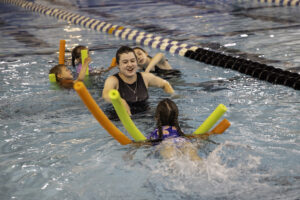
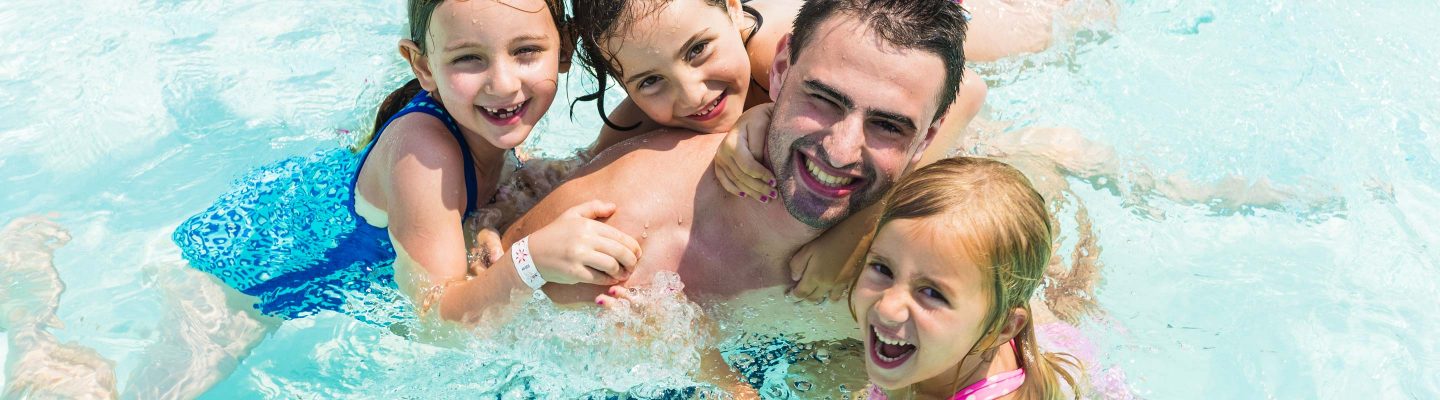
The Talmud teaches that among the most important skills to teach our children is the ability to swim. We take this teaching seriously at Ramah Boston and offer a strong instructional swim program that is designed not just to teach children how to swim, but to help them become confident, capable, and safe in and around the water.
Program Overview & Philosophy
Ramah Boston partners with Bentley University for our swim program, giving campers access to a high-quality aquatic facility in a structured, supportive environment. Campers swim Monday through Thursday, traveling by bus from camp to Bentley with trained staff supervising transportation and pool time.
Our instruction follows Lenny Krayzelburg’s SwimRight™ Academy Method, a nationally recognized approach to swim education built around one essential principle: water safety comes first.
Rather than rushing children into swim strokes, the SwimRight Method focuses on teaching kids how to stay calm, float, breathe, and respond safely if they unexpectedly fall into water. This “float-first” philosophy ensures that campers build real, life-saving skills before progressing to more advanced techniques.
At every level, we emphasize:
-
Water safety and emergency awareness
-
Confidence and independence in the water
-
Proper body position, breath control, and technique
-
Gradual, developmentally appropriate skill progression
Our goal is for every child to leave Ramah Boston knowing how to act if they fall into water, how to stay safe, and how to enjoy swimming with confidence.


Swim Levels
Campers are placed into levels based on ability, not age. Each level builds directly on the one before it, ensuring strong foundations and steady progress. Early levels focus heavily on comfort, floating, and safety skills, while advanced levels refine freestyle, backstroke, breaststroke, and butterfly for strong, efficient swimming.
We use an online progress-tracking platform that allows families to follow their child’s development throughout the summer. Parents can see:
-
Which level their child is in
-
What skills they are working on
-
When they are ready to advance
This transparency helps families understand the process and celebrate progress—especially in a program where mastering foundational safety skills is just as important as visible “swimming.”
FAQs – Frequently Asked Questions
All swim lessons take place at Bentley University’s aquatic facilities. Campers travel by bus from Ramah Boston to Bentley, Monday through Thursday, with Ramah staff supervising transportation and swim time.
SwimRight is a structured, safety-first swim program developed by four-time Olympic gold medalist Lenny Krayzelburg over 20+ years. It teaches kids to be safe in the water before teaching them to swim, with a clear, step-by-step progression where every skill builds on the one before it. More than 45,000 children have learned to swim through this method.
The back float is the position that can save a child’s life — it keeps them calm, breathing, and in control if they ever fall into the water unexpectedly. Strokes require energy, coordination, and calm thinking — three things a panicked child won’t have in an emergency. Once the back float is solid, every other swimming skill becomes easier and safer to learn.
On the first day, your child’s instructor will take them through a series of skills to see what they can do today — things like floating, kicking, body position, and basic strokes. Based on what they demonstrate, your child is placed in the level that matches their current ability. The whole process is quick, friendly, and built so kids feel comfortable, not tested.
Placement is based on what your child can show us today — not what they could do before. The two most common reasons are that SwimRight’s standards are more specific than other programs (so a child evaluated elsewhere may naturally land differently here), or that swim skills naturally fade after time away from the water. Starting at the right level is what helps your child move up faster and more confidently.
This is one of the most common things we see, and it’s completely normal. Most kids don’t swim regularly between summers, so some skills naturally fade — it doesn’t mean your child has lost anything. With consistent practice this summer, kids usually move up quickly once those foundational skills come back.
Kids move up when they’ve truly mastered the skills required for their current level — not based on age, time, or instructor preference. Every level has clear, specific skills that must be checked off, which keeps placement fair and consistent across instructors. When the foundation is solid, the next level becomes easier and safer for your child.
Not at all — taking time at a level usually means we’re making sure the foundation is strong. Rushing kids through can lead to bad habits or fear that takes much longer to fix later. The stronger the foundation, the faster and more confidently your child will progress from here on out.
Swimming is a sport, and like any sport, it takes time and repetition to truly learn. A few weeks of camp won’t turn a beginner into a confident swimmer overnight — and that’s normal. What we can promise is that every day your child is in the water, they’re building real skills the right way, with safety as the foundation.
Swimstr is our skill-tracking app that lets you see exactly which skills your child is working on and which they’ve mastered — no more guessing how lessons are going. We recommend checking it once a week to follow your child’s progress and celebrate their wins. It’s the easiest way to stay connected to your child’s swim journey throughout camp.
Our instructors aim to update Swimstr daily, but with the pace of camp it sometimes carries into the next day. For that reason, we recommend checking the app once a week — that gives instructors time to capture the full picture of your child’s progress and gives you a clearer sense of growth across the week. Daily check-ins can show partial information; weekly check-ins tell the real story.
The best thing you can do is celebrate effort over outcome — kids who feel encouraged stick with it longer and learn faster. If you have access to a pool outside of camp, even occasional practice helps reinforce what they’re learning. And whenever possible, talk about water safety positively — it makes a lasting difference.
Every instructor goes through a standardized training and certification process on the SwimRight Hub, which covers our full curriculum, drill progressions, and teaching standards. This means every instructor — regardless of background or experience — teaches from the same proven framework. It’s how we deliver consistent, high-quality lessons across every group, every day.
That’s okay—and very common. Our instructors are trained to work with nervous and beginner swimmers, using gentle, structured steps that help children feel safe, supported, and successful in the water. We start where your child is comfortable and build trust before introducing new skills — there’s no pushing, dunking, or forcing. Most fearful kids gain real confidence within a few sessions when the experience feels safe and supportive.
Yes — SwimRight is built to serve every camper at exactly their level. With nine clearly defined levels from Splashers (brand-new to water) through Flyers (all four competitive strokes), your child is placed precisely where they’ll grow the most. Whether they’re learning to float for the first time or refining their butterfly, every lesson moves them forward.
Most camp programs teach strokes first; SwimRight teaches survival first — back floating, breathing, and self-rescue come before any stroke work. Our nine granular levels (versus the typical five or six) help kids see real progress more often, and every instructor teaches from the same standardized framework. The result is a safer, more consistent experience that produces stronger swimmers long-term.